This is the packing list we'd send our own family. Not a generic "national park" list — a list specific to Sequoia, where the elevation swing inside the park is bigger than most people expect, the weather changes faster than the forecast suggests, and the gas stations sell mostly Slim Jims.
The seven things every guest forgets
These are the items we end up loaning out to one guest a week. Pack them and you'll thank us:
- A real water bottle per person (not a plastic supermarket one — those crack at altitude)
- Layers — even in July, the top of Moro Rock can be 20°F colder than your home in Three Rivers
- Closed-toe shoes — flip-flops are fine for our deck and the swimming holes, but every park trail is rocky
- Cash — not for everywhere, but for parking quirks, the ice-cream lady, and the gas station in Three Rivers village (which sometimes goes card-machine-down for a day)
- A flashlight or headlamp — black bears are around at dusk, and the road back from a dinner can be very dark
- An empty cooler — for picnics inside the park, ice from the village
- Sunscreen — even in winter, the high-elevation sun burns. We have a basket of half-empty bottles guests have left behind, but please bring your own
Year-round essentials
These are non-negotiable in any season:
- Sunglasses (UV is intense at 6,000+ feet)
- Sunscreen (SPF 30+, zinc-based if you'll swim — see the swimming guide for why)
- A hat with a brim
- Lip balm with SPF
- A backpack you don't mind getting dirty
- Hiking shoes or sturdy sneakers
- A reusable water bottle (1L+)
- Snacks (the cafeteria-pricing inside the park will sting)
- Phone charger + a backup battery pack (cell service is spotty inside the park; your phone burns through battery looking for signal)
- A paper map (or Google offline maps downloaded before you leave the village)
- Cash ($20–40 in singles + small bills)
Summer (June–September)
The forecast in Three Rivers in July might be 100°F. The forecast at General Sherman is 78°F. Both are correct.
- Shorts + a t-shirt for daily wear
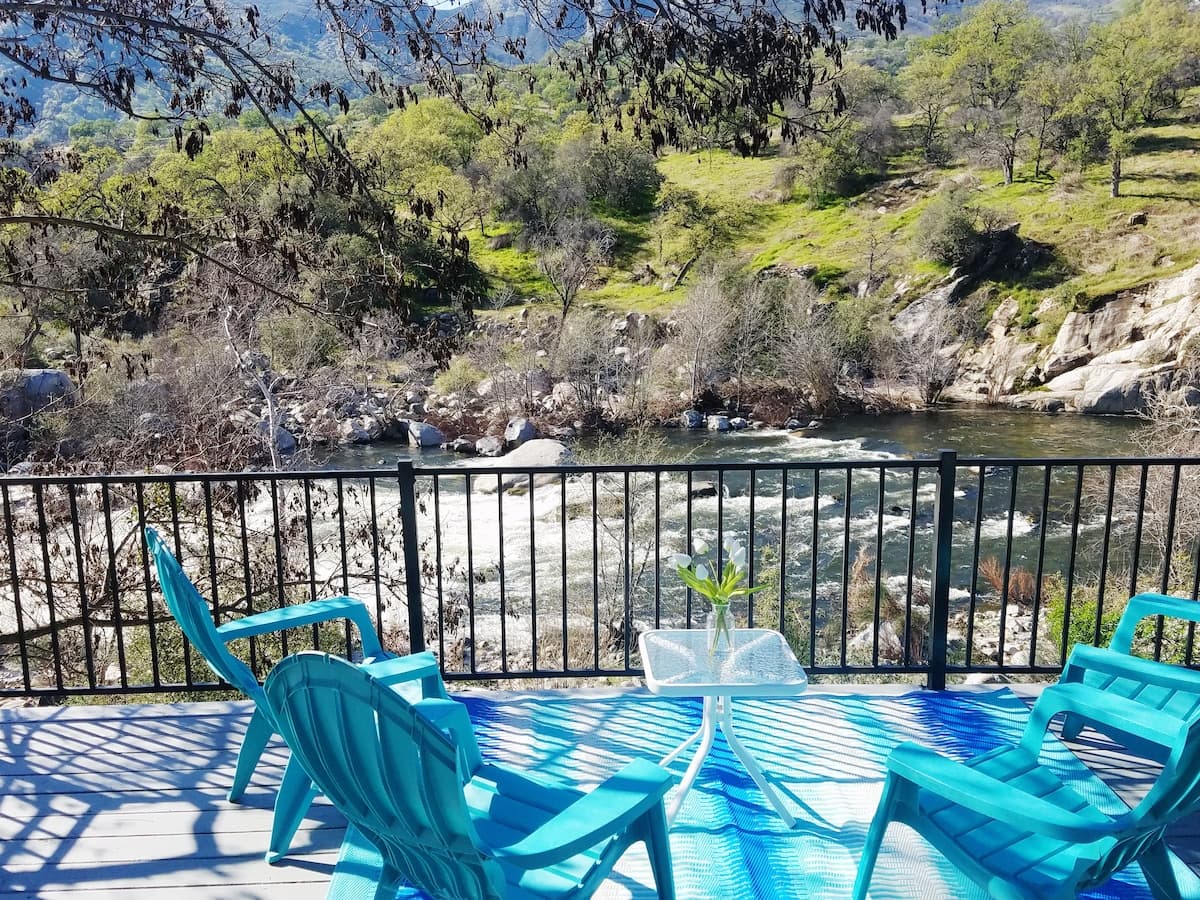
- Long pants for evenings on the deck (mosquitoes appear at dusk)
- A light sweater or fleece for inside the park — bring it in your day pack
- Swim suit + water shoes (every river-rock injury we see could've been prevented by water shoes)
- Beach towel per person
- Bug spray with picaridin — the river edge has biting flies after sunset
- Aloe vera gel for the inevitable river-rock ankle scrape
If you're hiking longer trails (Tokopah Falls, Mineral King area):
- Real hiking boots, not running shoes
- Hiking poles if you're over 50 or have any knee issues
- Electrolyte powder for water bottles
- A hat that won't blow off
Fall (October–November)
The shoulder season. Smaller crowds, gold colors in the high country, water still warm enough to dip your feet.
- Layers — mornings drop into the 40s, days warm into the 70s
- A waterproof shell (rain is rare but the Sierra brews a thunderstorm in 20 minutes)
- Long sleeves + light gloves for high-elevation morning hikes
- A real warm coat for evenings — even the deck cools off after sunset
The river starts dropping in fall — wading is still pleasant in October most years, but full-body swimming gets brisk. See the river swim guide for water-temp specifics.
Winter (December–March)
Three Rivers gets occasional snow. Sequoia gets a lot of snow. The road into the park is plowed but chains are required above 5,000 feet from November through April. Yes, even on AWD/4WD vehicles. This is non-negotiable park policy and the rangers will turn you around at the chain checkpoint.
- Tire chains — buy or rent in Three Rivers (the gas station rents them for ~$25/day) before you head up. Practice putting them on in your driveway before you need them in a snowstorm.
- A serious winter coat — not a city puffer
- Waterproof boots, not sneakers
- Wool socks (cotton is the enemy in winter)
- A hat + gloves
- A small shovel in your trunk — overkill in normal years, lifesaver if you slide off a side road
- Hot drinks in a thermos — coffee at the visitor center is fine but always 30 minutes away
- Cash for chain rental — some places card-machine-down in December
For more on what to expect in a winter visit, see Sequoia in winter.
Spring (March–May)
Wildflowers, big rivers, mud.
- Waterproof boots — trails are muddy until June at high elevations
- A rain shell
- Layers — same temperature swing as fall
- A spare set of dry socks in your day pack
- DO NOT swim in the river in spring — see the swim guide safety section. The runoff is fast and dangerous.
For wildflower timing, see the spring wildflower post.
What NOT to bring
A few things we see guests bring that don't help:
- A drone. Drones are illegal in all national parks. Confiscation + fines.
- A bicycle. The park roads are too winding and narrow for safe cycling.
- Hammocks for "stringing between trees in the park." This damages bark on protected sequoias. Hang it on our deck instead.
- Bear spray. Sequoia's black bears are managed by deterrence, not defense — the park does not require or recommend bear spray for day visitors. If you're backpacking overnight, focus on food storage (a bear canister is required for backcountry trips).
- Speakers for "playing music on the trail." Other hikers will hate you.
What we provide
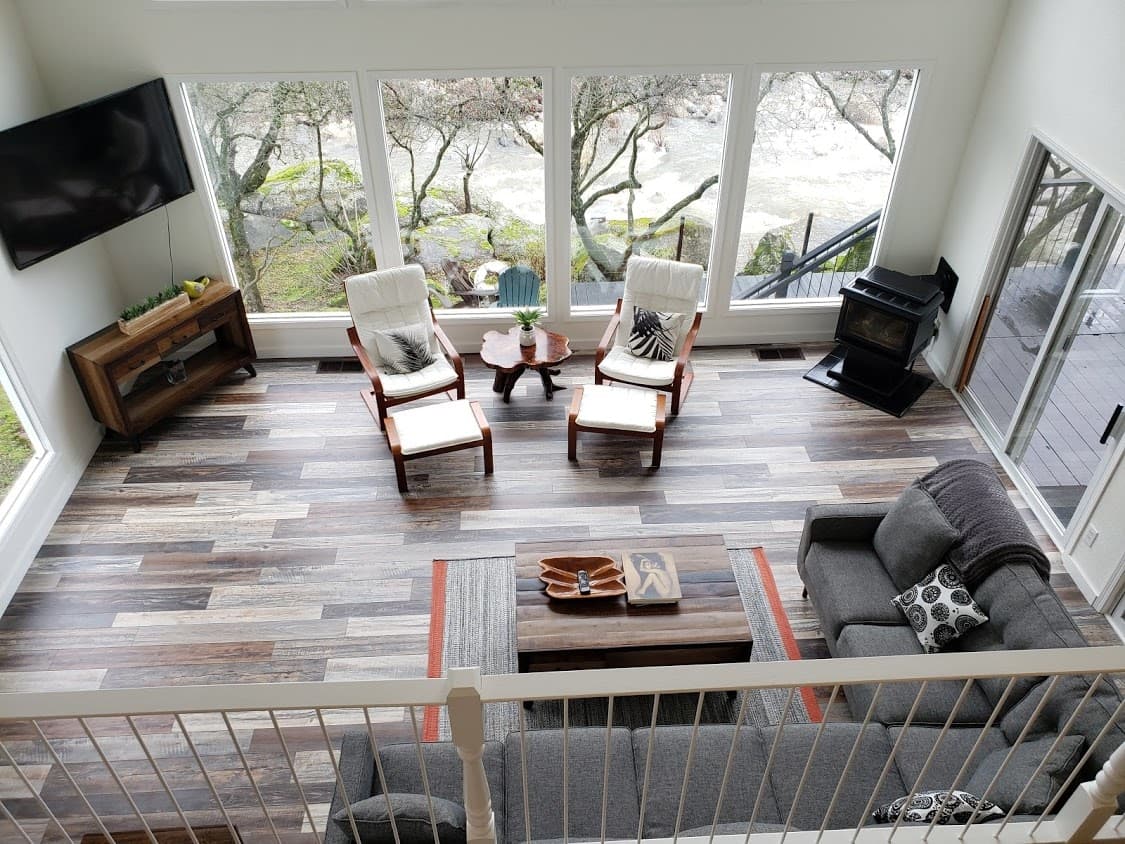
To save you packing space, every one of our homes comes stocked with:
- Beach + bath towels
- Coffee maker + filters
- Basic cooking essentials (oil, salt, pepper, a few common spices)
- Laundry detergent
- Shampoo + conditioner + body wash
- Hair dryer
- High-speed Wi-Fi (yes, even in the more secluded ones)
- Smart TVs with streaming
- Board games + a few books for the kids
What we don't provide and you'll need to buy locally:
- Groceries (Three Rivers Mercantile is the village option; bigger Visalia grocery stores are 30 min downriver)
- Specific dietary items
- Diapers, baby formula, kids' medication
Where to buy if you forgot something
Three Rivers village has more options than you'd think:
- Three Rivers Mercantile — basic groceries, ice, beer, fishing tackle, sundries
- The gas station — chains, jumper cables, basics
- Reimers' Candies — candy, ice cream, basic souvenirs
- Sierra Subs and Salads — packaged sandwiches if you're heading out for an early hike
For real shopping, head 30 minutes downriver to Visalia (Costco, Target, REI Co-op, Trader Joe's). Don't try to drive to Visalia after a Sequoia day — you'll be too tired. Plan it for arrival or departure day.
Final word
When in doubt, pack one more layer than you think and one fewer pair of shoes. Most guests over-pack clothes and under-pack the boring stuff (sunscreen, water, snacks). Reverse that ratio and you'll be set.
We see you on the deck.